
Satta Matka Records & T20 Cricket Prediction: A Comprehensive Guide for Bettors
Introduction
The world of sports betting has evolved dramatically over the past decade. While traditional games like satta matka records continue to captivate a loyal audience in South Asia, the meteoric rise of Twenty‑20 (T20) cricket has opened new horizons for analytical bettors. This article bridges the gap between the time‑tested methodologies of satta matka and the data‑driven approaches required for modern T20 prediction. Whether you are a seasoned matka player looking to diversify your portfolio or a novice who wants to understand the mechanics behind successful cricket forecasts, the insights presented here will equip you with practical tools and strategic mindsets.
Understanding Satta Matka: Foundations for Modern Betting
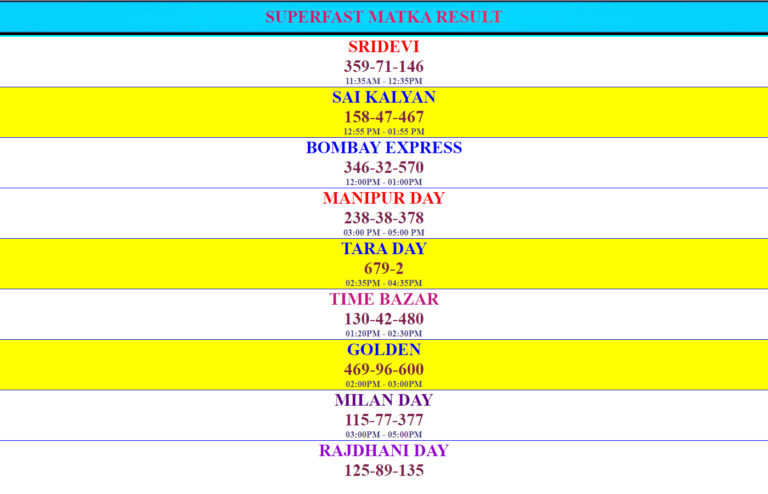
Satta matka, originally a form of lottery that emerged in the 1960s, relies heavily on patterns, probability, and the interpretation of historic draw results. Over the years, participants have developed a repertoire of techniques—such as “gap analysis,” “frequency charts,” and “trend tracking”—to improve their odds. While the game’s specifics differ from sports betting, the underlying statistical principles remain universally applicable.
Key Concepts from Matka Applied to Cricket
- Frequency Analysis: Just as matka players track how often certain numbers appear, T20 analysts monitor the frequency of specific outcomes—run rates, wicket clusters, and player dismissals.
- Gap Theory: In matka, a “gap” denotes the number of draws that have passed since a particular number last appeared. Translated to cricket, gaps can be viewed as the interval between high‑scoring overs or the recurrence of particular batting partnerships.
- Peak & Trough Patterns: The identification of peaks (hot streaks) and troughs (cold spells) in number draws helps matka players anticipate future moves. Similarly, recognizing a team’s recent form peaks—such as consecutive 180+ totals—guides predictive models for upcoming matches.
Why T20 Cricket Demands a Different Analytical Lens
T20 cricket condenses a traditional 50‑over game into a high‑octane 120‑ball showdown. This compression amplifies volatility, making conventional cricket statistics less predictive on their own. The rapid shift in momentum, the strategic use of power‑plays, and the prevalence of specialist players require bettors to integrate real‑time variables, such as pitch condition, weather, and even toss outcomes.
Data Sources Essential for Accurate T20 Prediction
To construct a reliable forecast, consider the following data pillars:
- Historical Match Data: Combine head‑to‑head records, venue‑specific scores, and previous T20 outcomes for each team.
- Player Form Index: Track recent performances across leagues (e.g., IPL, BBL, CPL) to gauge current batting and bowling efficacy.
- Situational Variables: Factor in toss decisions, pitch reports, dew factor, and even travel fatigue for touring sides.
- Advanced Metrics: Metrics such as Expected Runs (xRuns), Win Probability (WP), and Player Impact Scores provide a nuanced view beyond raw averages.
Integrating Matka Strategies with T20 Analytics
Here’s a step‑by‑step framework that merges the disciplined approach of satta matka with contemporary cricket analytics:
Step 1 – Build a Master Database
Gather at least three seasons of T20 data for the competition you intend to bet on. Include match dates, venues, toss outcomes, final scores, top performers, and ball‑by‑ball events. This mirrors the matka practice of maintaining extensive draw archives.
Step 2 – Conduct Frequency & Gap Analysis
Identify the most frequent total scores (e.g., 150–160) for each venue. Then calculate the “gap” between these high‑frequency events. For instance, if a ground has produced 170+ totals every 4th match, the gap suggests a probability spike for the next match after a three‑match gap.
Step 3 – Apply Probability Weighting
Use Bayesian updating to adjust priors based on new information (e.g., a key batsman’s injury). This step reflects the matka practice of re‑weighting number probabilities after each draw.
Step 4 – Model Scenario Outcomes
Run Monte Carlo simulations that incorporate the frequency data, gap metrics, and real‑time variables (toss, pitch). Generate a distribution of possible total scores, and isolate the most likely ranges for betting.
Step 5 – Validate with Live Betting Platforms
Cross‑check your projected ranges with the odds offered by reputable betting exchanges. Discrepancies where your model predicts a higher probability than the market implies value bets.
Practical Example: Predicting a High‑Scoring Match
Consider an upcoming T20 fixture between the Mumbai Strikers and the Brisbane Blazers at the Wankhede Stadium. Historical data shows Wankhede producing 170+ scores in 38% of T20 matches, with a recent gap of two matches since the last 180‑plus total.
Applying the steps above:
- Frequency analysis confirms 170–180 as the dominant total range.
- Gap analysis indicates a rising probability for a high total, given the two‑match lull.
- Current player form reveals both teams boasting three openers with strike rates above 150.
- Monte Carlo simulation (10,000 iterations) outputs a 62% chance of the match total exceeding 170 runs.
- Betting odds on major exchanges list 2.1 for “total over 170,” implying a 47.6% implied probability. The model’s 62% suggests a potential value bet.
In this scenario, a bettor incorporating matka‑style gap theory would identify the over‑170 market as favorable, aligning with both statistical evidence and market inefficiency.
Risk Management: Lessons from Satta Matka
Effective betting is not solely about prediction accuracy; it’s equally about preserving capital. Traditional satta matka players follow strict bankroll management—often limiting stakes to 1–2% of their total funds per draw. This disciplined approach prevents catastrophic losses during inevitable losing streaks.
Key Risk Mitigation Techniques
- Set Stake Limits: Allocate a maximum stake per bet, typically 1.5% of your bankroll, and never exceed it.
- Diversify Bet Types: Combine straight bets (e.g., match total over/under) with prop bets (e.g., player to score fifty) to spread risk.
- Use Stop‑Loss Triggers: Define a loss threshold (e.g., 10% of bankroll) that, when reached, prompts a temporary pause from betting.
- Maintain a Betting Journal: Record every wager, rationales, outcomes, and emotional states. Over time, this data reveals patterns of bias and helps refine strategies.
Leveraging Technology and Communication Channels
Modern bettors benefit from real‑time data feeds, AI‑driven predictive engines, and community insights. While many rely on private messaging groups for quick updates, it’s essential to verify the credibility of information sources. Trusted channels often provide contact numbers for direct queries.
If you require a reliable point of contact for instant updates, you may consider reaching out via the cricbet365 id whatsapp number. This line frequently shares curated match insights, odds comparisons, and strategic tips for both matka and cricket betting enthusiasts.
Ethical and Legal Considerations
Betting regulations vary across jurisdictions. Before engaging in any form of wagering, ensure that you are operating within the legal framework of your country or region. Moreover, always play responsibly—recognize that gambling carries inherent risk, and seeking help for problem gambling is a sign of strength, not weakness.
Future Trends: AI, Blockchain, and the Evolution of Betting
The convergence of artificial intelligence and blockchain technology promises to reshape how bettors access data and place wagers. AI models can process vast datasets in seconds, delivering predictive probabilities with unprecedented precision. Meanwhile, blockchain offers transparent, tamper‑proof record‑keeping, potentially reducing disputes over bet settlements.
For matka enthusiasts, these innovations may translate into digitized draw histories, automated gap calculations, and even smart contracts that execute bets automatically when predetermined conditions are met. Staying abreast of these trends will be vital for maintaining a competitive edge.
Conclusion
Bridging the analytical rigor of satta matka with the dynamic environment of T20 cricket creates a potent betting framework. By mastering frequency and gap analysis, integrating advanced statistical models, adhering to disciplined bankroll management, and leveraging reputable communication channels—such as the goldenexch99 id whatsapp number—you position yourself to capitalize on market inefficiencies while mitigating risk.
Remember, no prediction method guarantees success; the goal is to tilt the odds in your favor over the long term. Embrace continuous learning, refine your models with each match, and maintain ethical betting practices. With these principles, the convergence of matka heritage and modern T20 analytics can become a rewarding pursuit for any serious bettor.